
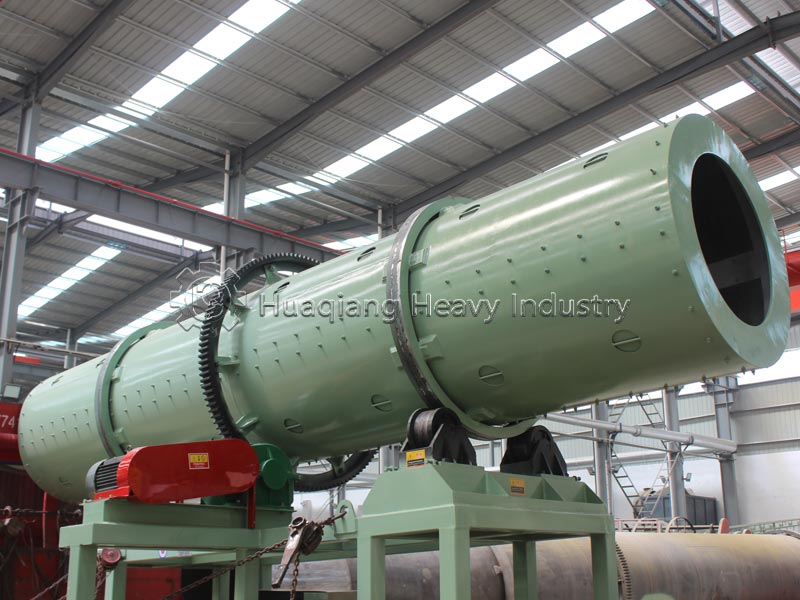


rotary drum granulator
Equipment Introduction
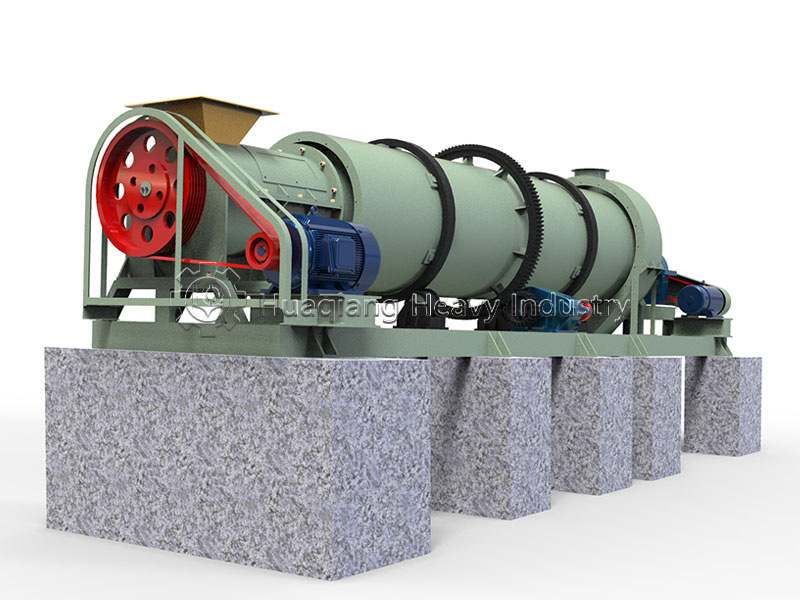
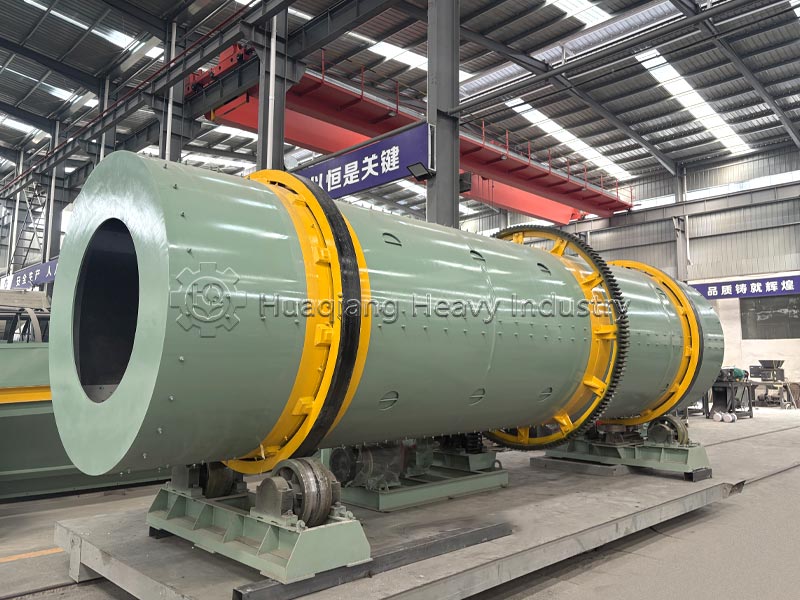
The rotary drum granulator (also known as a wet agglomeration continuous granulation machine) is a large-to-medium-sized mass production molding equipment, and a core main model for compound fertilizer, organic fertilizer, and mineral powder granulation. Unlike flat die extrusion granulation and roller dry granulation, its core process is rotary drum tumbling + liquid phase bonding and agglomeration molding. It relies on the material's own rolling friction, capillary adsorption, and binder penetration to agglomerate fine powder materials into spherical particles.
Industry Core Positioning: High capacity, continuous operation, good sphericity, high particle strength, and suitability for large-scale production lines. It is the standard granulation equipment for formal fertilizer plants, chemical powder processing plants, and mineral processing enterprises. The equipment can achieve 24-hour uninterrupted continuous production, producing round, uniform granules with excellent flowability, suitable for bagged storage, mechanized fertilization, and assembly line packaging. It completely avoids the shortcomings of small granulators, such as low capacity, poor particle quality, and inability to mass produce, making it the mainstream equipment for industrial-grade granulation.
Core machine attributes: The equipment cylinder adopts an inclined installation structure and rotates at low speed through gear transmission. It is suitable for wet granulation processes and can be used with steam, water, binder liquid, and reaction liquid to achieve physical agglomeration or chemical granulation, meeting the high-end mass production needs of the industry.
Equipment Structure and Components
The precision of a rotary granulator lies in its overall balance and durability, primarily composed of the following parts:
1. Support Frame: The entire rotating cylinder is supported by a set of rollers, bearing a weight of tens or even hundreds of tons. High-quality equipment is typically cast from medium carbon steel, possessing extremely high load-bearing capacity and wear resistance.
2. Transmission Device: Composed of a main motor, reducer, large and small gear sets, and drive shaft. The cylinder rotation is driven by the large gear. Modern designs often employ frequency conversion speed regulation to adapt to the speed requirements of different formulations.
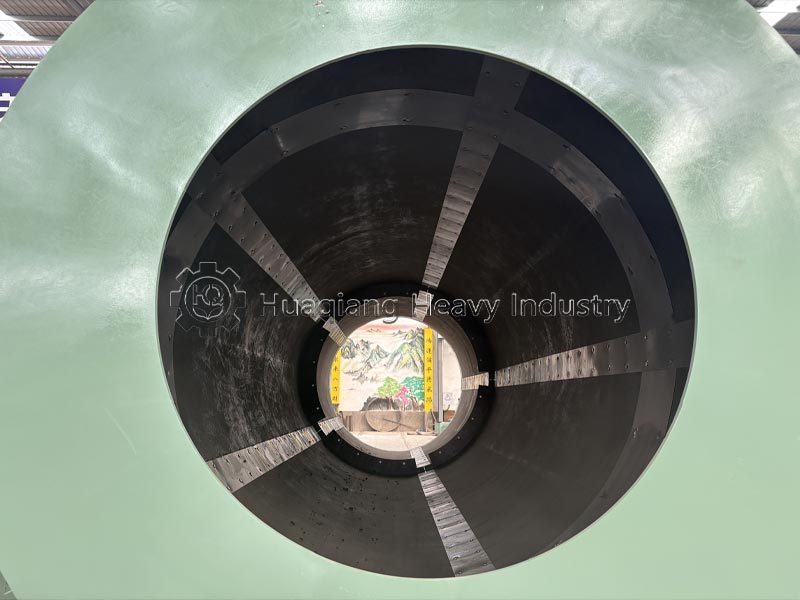
3. Cylinder: The core component, typically made of thickened steel plate. The inner lining of the cylinder is crucial; common options include:
High-polymer rubber lining: Corrosion-resistant, anti-adhesive, easy to clean, and utilizes the slight vibration of the rubber for automatic descaling.
Acid-resistant stainless steel lining: Suitable for highly corrosive materials.
4. Roller Belt (Track): Embedded at both ends of the cylinder, precisely meshing with the rollers to ensure the cylinder's rotational centerness.
5. Inlet and outlet: Designed with dust-proof sealing devices to ensure a clean production environment.
Raw Materials for the Equipment
The rotary drum granulator is adaptable to a wide range of raw materials, mainly including:
1. Fertilizer Raw Materials
Basic Fertilizers: Urea, ammonium chloride, ammonium sulfate, monoammonium phosphate, potassium chloride, potassium sulfate, etc.
Compound Fertilizer Raw Materials: Various powdered nitrogen, phosphorus, and potassium fertilizers and trace elements
2. Organic Raw Materials
Livestock and Poultry Manure: Cow manure, sheep manure, pig manure, chicken manure, duck manure, etc.
Plant Raw Materials: Straw, mushroom residue, etc.
Industrial Organic Waste: Domestic sewage sludge, papermaking sludge, etc.
3. Key Raw Material Indicators
Moisture Content: For compound fertilizer granulation, it is recommended to control it at 2%-4%; for organic fertilizer granulation, control it at 20%-30%; the hand feel standard is "it can be formed into a ball when squeezed, but crumbles when dropped."
Feed Particle Size: Powdered materials need to be crushed to below 100 mesh.
Raw Material Ratio: The proportion of each raw material needs to be precisely controlled according to the product formula.
Equipment working principle
Its core principle can be summarized as "wet pelletization into balls":
After the material enters the rotating cylinder, the material forms a cyclic motion similar to an "avalanche" through the inclination of the cylinder (usually 2°-5°) and the lifting effect generated by the rotation. The spray pipe installed inside the cylinder sprays binder or steam, and the surface of the material is moistened. In the continuous rolling extrusion, the materials are combined with each other through physical adsorption force. As the cylinder rotates, the small particles serve as parent nuclei to continuously absorb the surrounding powder, and are eventually ground into regular spherical particles under the alternating action of centrifugal force and friction.
1. Pre-start Inspection and Preparation
Check the integrity of the cylinder, gear ring, support rollers, and retaining rollers; tighten any loose bolts. Check the sealing structure, spray pipes, and nozzles for blockages. Adjust the frequency converter speed and atomizing spray pressure, and calibrate the cylinder tilt angle. Perform a no-load rotation test to ensure the equipment is free from jamming and abnormal noise. Check the material fineness and moisture content, and prevent impurities from entering the material.
2. No-load Trial Run
Start the main unit and run it under no-load for 5-10 minutes. Observe the cylinder rotation stability, the transmission system operation status, and the force on the support rollers. Only after confirming no deviation, vibration, or abnormal noise can material be fed into production.
3. Formal Production Operation
First, turn on the spray atomization system and preset the basic spray volume. Then, start the feeding equipment and feed material at a uniform speed and quantity. Fine-tune the cylinder speed, spray flow rate, and feeding speed according to the particle size and compaction. Monitor the particle quality and equipment operating load in real time during production to ensure uniform tumbling layers and stable forming of the material within the cylinder. 4. Normal Shutdown Procedure: First, stop feeding while keeping the cylinder running continuously. Simultaneously, activate the spray system to clean and empty any remaining material from the cylinder. After the material is completely emptied, sequentially shut off the spray system, main power supply, and power supplies to auxiliary equipment. Clean any adhering material inside the cylinder and unclog the nozzles.
5. Emergency Shutdown Procedure: In case of material blockage, abnormal noise, excessive vibration, motor overload, or spray system malfunction, immediately shut down the machine by cutting off the power. Do not operate the machine while it is malfunctioning. The machine may only be restarted after the fault has been identified and repaired.
Common Equipment Problems and Solutions
1. Low Pelletizing Rate:
Causes: Excessive or insufficient moisture; insufficient material fineness; improper rotation speed.
Solutions: Precisely control the spray volume; increase the raw material grinding fineness; adjust the frequency converter to change the rotation speed.
2. Severe Cylinder Vibration:
Causes: Change in gear meshing clearance; foundation settlement; damaged support roller bearings.
Solutions: Readjust the gear clearance; reinforce the foundation; replace the bearings.
3. Material Sticking to the Wall:
Causes: Excessive material moisture; damaged lining.
Solutions: Control the moisture content of the feed material; repair or replace the rubber lining.
Equipment Maintenance Methods
1. Lubrication Maintenance (Most Important)
Bearings bear the entire load of the machine. Good lubrication directly affects bearing life, impacting the machine's service life and operating rate. The lubricating oil must be clean, and seals must be in good condition. Main lubrication points include:
Rotating bearings
Roller bearings
All gears
Moving bearings, sliding surfaces
Add an appropriate amount of grease to the bearings every 1-2 days for frequent use; add grease weekly for infrequent use.
2. Daily Inspection
Pay attention to the normal operation of all parts of the machine.
Check the wear of easily worn parts and replace worn parts promptly. Newly installed wheel rims are prone to loosening and must be checked frequently. The base surface of the movable device should be cleaned of dust and other debris.
3. Temperature Monitoring
If the bearing oil temperature rises, stop the machine immediately to check and eliminate the cause. If there is an impact sound when rotating gears are running, stop the machine immediately for inspection.
4. Regular Maintenance
Regularly check the wear of the support rollers and rolling rings.
Regularly clean the material adhering to the inner wall of the cylinder.
Check the meshing of the transmission gears and the oil level in the lubricating oil sump.
Application of Equipment in Production Lines
Drum granulators are typically used as the core granulation equipment in production lines, located after crushing and mixing processes and before drying, cooling, and screening processes.
1. Typical Flowchart of Compound Fertilizer/Blended Fertilizer Production Line
Raw material crushing → Batching and mixing → Drum granulation (steam or water introduced) → Drying → Cooling → Screening → Coating → Automatic packaging
The various processes are connected by equipment such as belt conveyors. The material exiting the granulator is dried, cooled, and screened to obtain the finished product.
2. Typical Flowchart of Organic Fertilizer Production Line
Fermentation Section (Fermentation, Composting, and Dehydration of Livestock and Poultry Manure) → Crushing and Sieving → Drum Granulation → Cooling → Screening → Packaging
3. Typical Flowchart of Ammonium Sulfate Production Line
Raw Material Preparation (Mixing Ammonium Sulfate Powder with Potassium Chloride, Urea, Monoammonium Phosphate, etc.) → Mixing and Stirring → Drum Granulation → Drying and Screening → Cooling and Packaging
4. Supporting Equipment for Production Line
Crushing Process: New Semi-Wet Material Crusher, Vertical/Horizontal Crusher
Stirring Process: Vertical Mixer, Horizontal Mixer, Twin-Shaft High-Intensity Mixer
Conveying Process: Belt Conveyor
Granulation Process: Drum Granulator (Core)
Drying and Cooling Process: Rotary Dryer, Cooler
Screening Process: Drum Screen, Vibrating Screen
Coating Process: Granule Coating Machine
Packaging Process: Automatic Quantitative Packaging Machine
Rotary drum granulators, with their core advantages of high output, high pelletizing rate, flexible processing (both hot and cold processing), and high pellet strength, have become the preferred granulation equipment for large-scale production in the fertilizer industry, including compound fertilizers and organic fertilizers. Their core technology lies in utilizing a rotating drum and wet granulation process to agglomerate powdery materials into high-strength spherical pellets under liquid phase conditions.
Whether you are building a new fertilizer production line and need a complete equipment solution, upgrading an existing line and need equipment selection advice, or dealing with equipment malfunctions and need technical support—we are always ready to provide you with professional and sincere service.
| Fertilizer Rotary Drum Granulator Machine | ||||||
| Model | Diameter(mm) | Length(mm) | Inclination(°) | Rotation Speed(r/min) | Capacity(t/h) | Motor Power(Kw) |
| ZG1.2*4.0 | 1200 | 4000 | 2.5 | 17 | 1-3 | 5.5 |
| ZG1.5*6.0 | 1500 | 6000 | 2.5 | 11.5 | 3-5 | 7.5 |
| ZG1.8*7.0 | 1800 | 7000 | 2.5 | 11.5 | 6-10 | 18.5 |
| ZG2.0*8.0 | 2000 | 8000 | 2.5 | 11 | 10-15 | 22 |
| ZG2.2*12 | 2200 | 12000 | 2.5 | 10.5 | 15-20 | 37 |